MODEL RAILWAYS
Scale and gauge
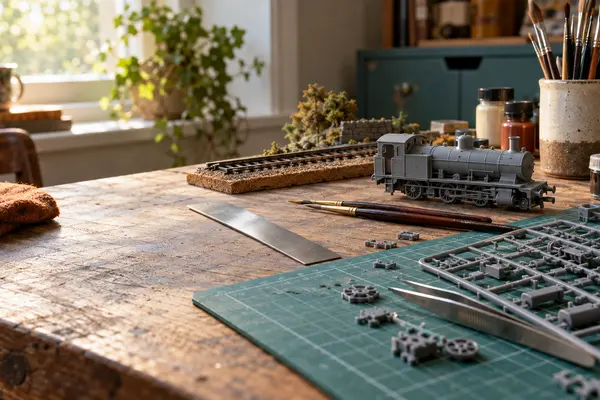
H0 is 1:87 on 16.5 mm track; N is 1:160 on 9 mm. The scale sets the model, the gauge sets the rails.
Try the shrinker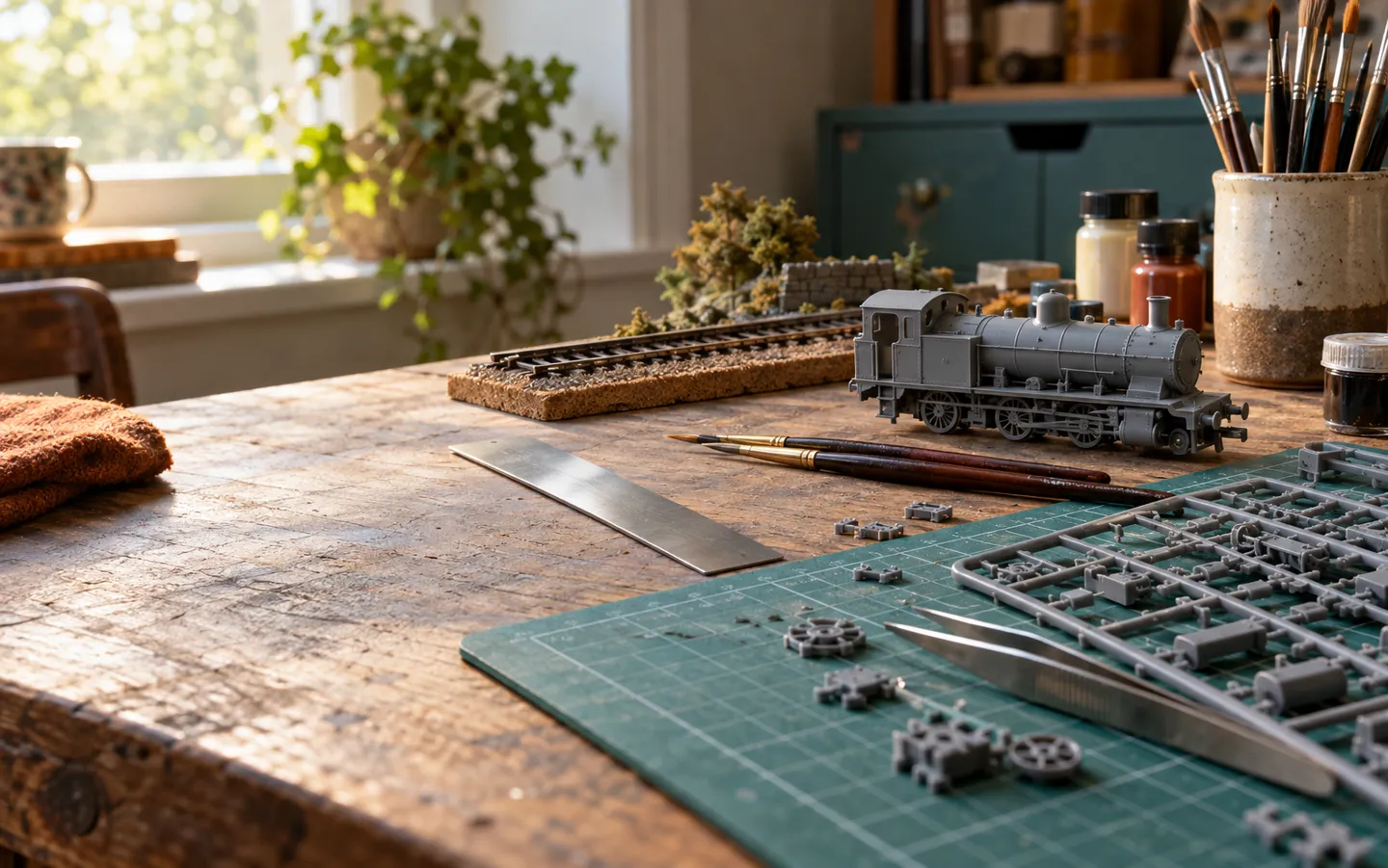
MODEL SCALES, EXPLAINED
1 : 87 divide by it
AI-generated image, not a photograph of a real person or place.
Every model, drawing and map is the real thing divided by one number.
1:87, 1:76.2, 1:25 000: the ratio on the box or the map tells you exactly how much the world has been shrunk. Learn to read it and you can check whether a figure, a building and a train belong together, or how far that footpath really is.
Plain English, with the standards linked.
THE SHORT ANSWER
The same idea runs through model trains,
technical drawings and walking maps.
MODEL RAILWAYS
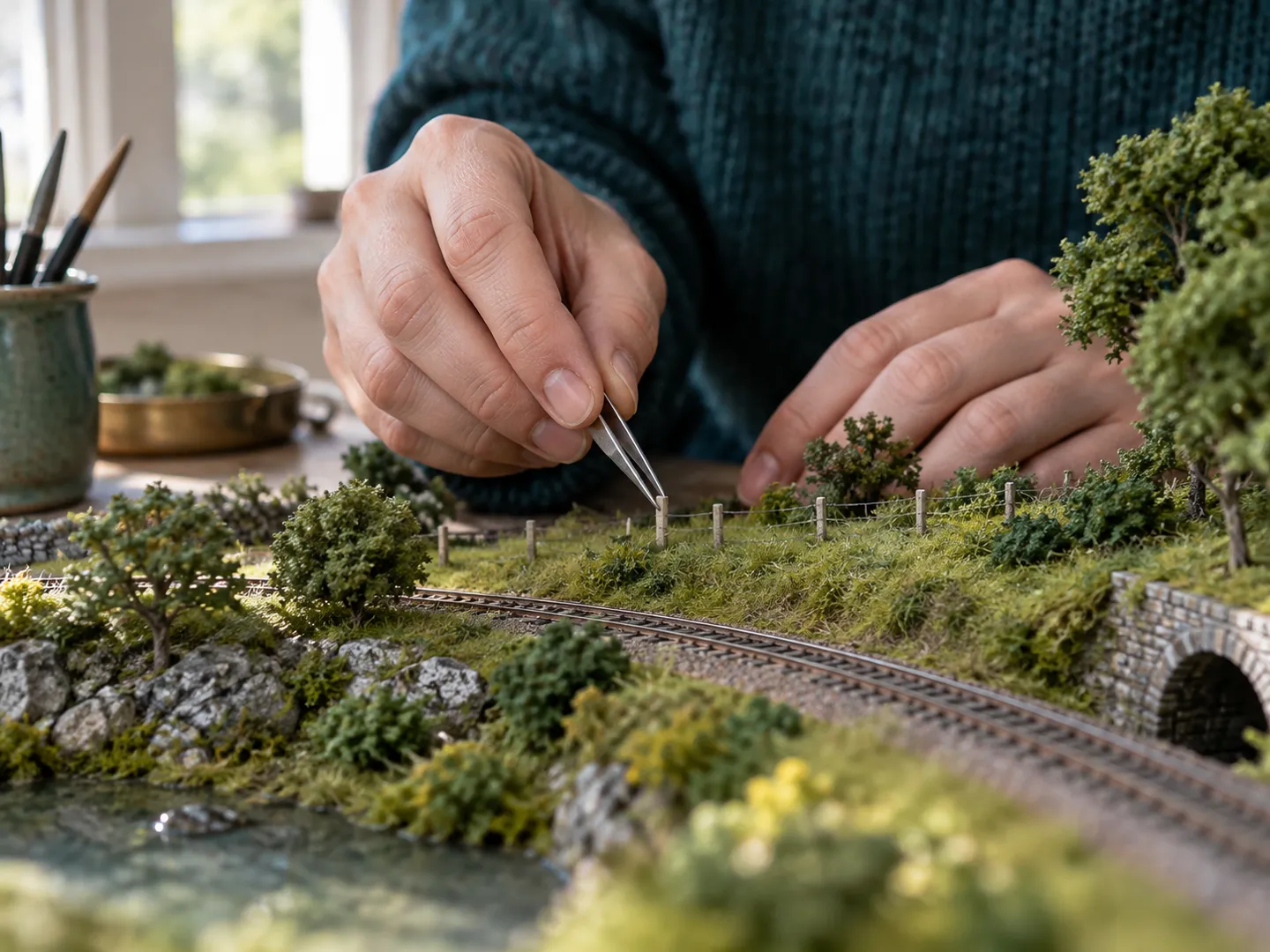
H0 is 1:87 on 16.5 mm track; N is 1:160 on 9 mm. The scale sets the model, the gauge sets the rails.
Try the shrinkerDRAWINGS AND MAPS
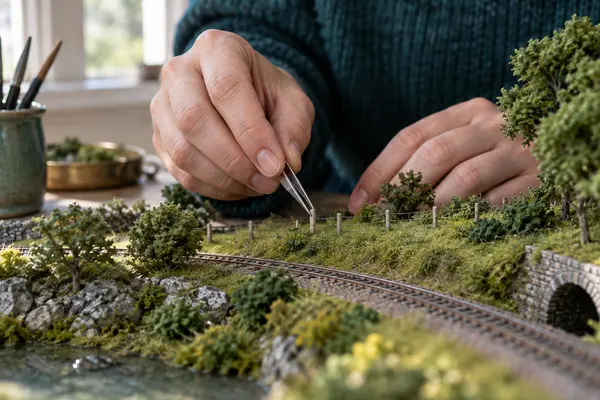
Technical drawings use a standard set of ratios such as 1:20, 1:50 and 1:100, and maps such as 1:25 000.
See the factsENGINEERING MODELS
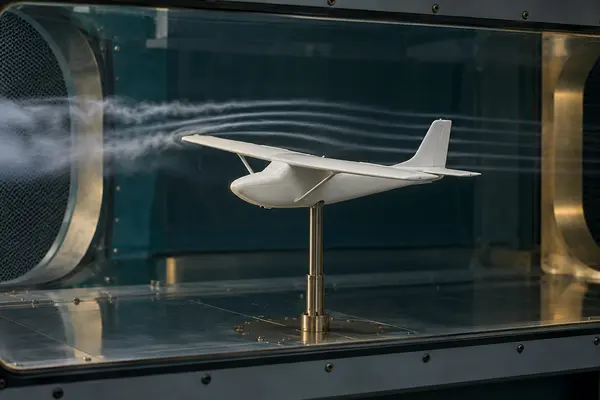
Engineers test scale aircraft in wind tunnels, but airflow does not shrink as neatly as the model does.
Why size matters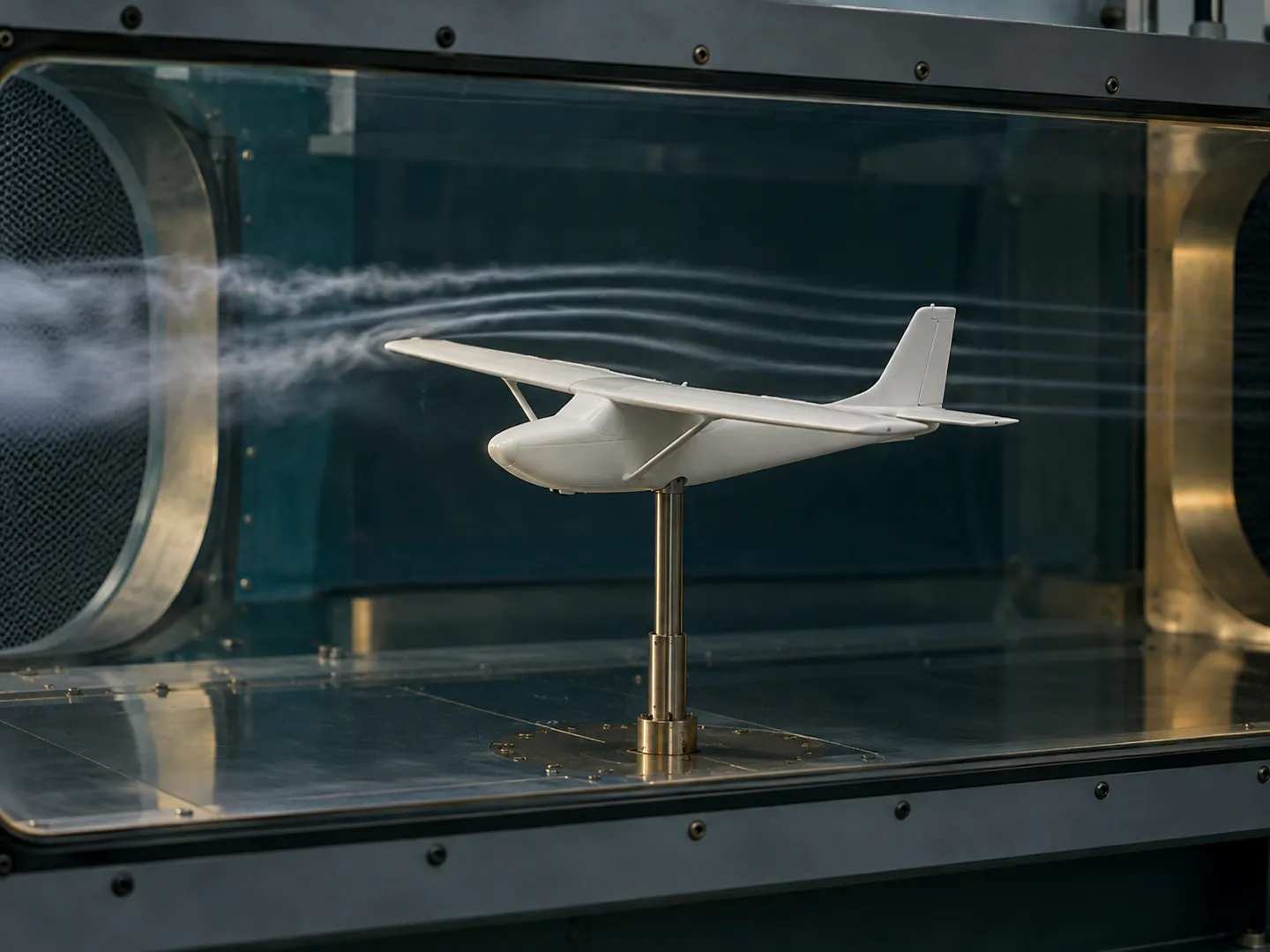
READ A RATIO
Take the real size in millimetres and divide by the scale number. A 3-metre door at 1:76.2 is about 39 mm tall.
Scale is about the model; gauge is the distance between the rails. Two models can run on similar track yet be built to different scales.
Figures, buildings and vehicles bought in different scales can differ by a seventh or more. Check the ratio on each box.
On maps and drawings, a larger number means more shrinking and less detail. 1:250 000 shows roads; 1:1250 shows single buildings.
TWO THINGS THAT DON'T SHRINK NEATLY
Shrinking length by a ratio does not shrink
area, weight or airflow by the same ratio.
7,569 and 658,503
Real-to-model ratio
Shrink length 87 times and surface area shrinks 87 × 87 = 7,569 times, while volume shrinks 87 × 87 × 87 = 658,503 times. That is why paint, glue and fine detail can look heavy on a small model.
AREA AND VOLUME · H0, 1:87
Re ÷ 10
A 1:10 wing at the same speed
NASA gives the Reynolds number as speed × length ÷ kinematic viscosity. Cut the length to a tenth at the same speed and in the same air, and the Reynolds number falls to a tenth too, so the air behaves differently around the model.
AIRFLOW · NASA
Both are simple arithmetic, not opinion: the area and volume figures are the scale number squared and cubed, and the airflow point follows directly from NASA’s formula.
THE SCALE SHRINKER
Pick a model railway scale to see how a 20-metre coach and a 1.8-metre person shrink. The ratios come from the European NEM 010 standard and, for OO, the American NMRA S-1.2 table.
The bar compares coach lengths, with 0 scale as the longest. Figures are rounded.
SCALE FACTS
Europe’s model railway standard NEM 010 (2011 edition) uses H0 at 1:87, with a standard-gauge model track of 16.5 mm.
The same standard runs from Z at 1:220 on 6.5 mm track, through N at 1:160 on 9 mm and TT at 1:120 on 12 mm, up to larger scales such as 0 at 1:45.
The NMRA’s S-1.2 table lists OO at 4.0 mm to the foot, a proportion of 1:76.2, against 3.5 mm to the foot, or 1:87.1, for HO.
ISO 5455 (published in India as IS 10713) recommends reduction scales such as 1:2, 1:5, 1:10, 1:20, 1:50 and 1:100, and enlargement scales from 2:1 up to 50:1.
Ordnance Survey explains that on a 1:25 000 map every 4 cm equals 1 km, and its grid lines are 4 cm apart, so each square is 1 km by 1 km.
QUICK QUESTIONS
Short answers to the questions people ask most.
It means one unit on the model stands for 87 of the same units on the real thing. One millimetre on an H0 model is 87 millimetres on the full-size train, so you divide real sizes by 87 to get model sizes.
H0 is 1:87 (NMRA gives 3.5 mm to the foot, about 1:87.1), while OO is built at 4 mm to the foot, about 1:76.2. OO models are therefore roughly 14% larger, which is why mixing the two on one layout can look odd.
Among the scales in the European NEM 010 standard, Z is the smallest at 1:220, running on track 6.5 mm apart. N follows at 1:160 on 9 mm track.
Because the number is how many times the real object has been shrunk. A 1:220 model is shrunk 220 times, a 1:45 model only 45 times. Map makers use the same logic: 1:250 000 is a small-scale map, 1:1250 a large-scale one.
Wind tunnels let engineers measure forces and airflow on a model before a full-size aircraft exists. Because airflow depends on size, a model at the same air speed has a lower Reynolds number than the real aircraft, so the results need careful interpretation.
Each figure on this page comes from the sources below.
A NAME BUILT TO SCALE
doodlemodel.com is part of the DoodleSale portfolio. It isn't in an auction right now, but you can ask about leasing it.